Geared for Glory: The Multimillion-Dollar Equipment War Being Waged in Every Pit Lane
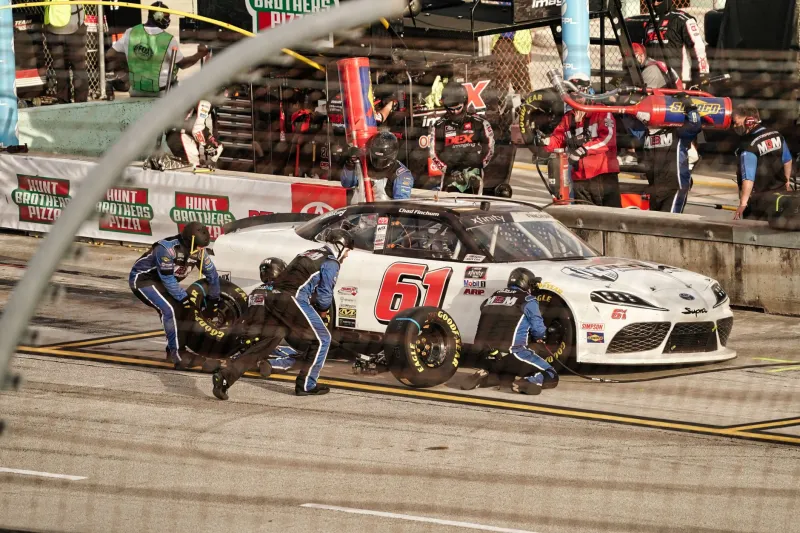
There's a moment during a race — blink and you'll miss it — when a pit stop goes absolutely perfectly. Four tires swapped, fuel topped, adjustments made, car back in the race. Under two seconds. Maybe under 1.8 if everything clicks just right. What looks like organized chaos from the grandstands is actually the product of an almost absurd amount of money, technology, and obsessive engineering happening long before race day.
Welcome to the pit crew arms race. It's quieter than the engines, less glamorous than the podium celebrations, but make no mistake — this is where championships are being won and lost before the green flag ever drops.
The Price Tag Behind the Perfect Stop
Let's talk numbers, because they're genuinely wild. Top-tier NASCAR and IndyCar teams are pouring anywhere from $500,000 to well over $2 million annually into their pit operation infrastructure alone. That's not driver salaries. That's not the car itself. That's equipment, facilities, and the technology required to make a group of humans operate like a finely tuned machine.
Custom pneumatic air guns — the kind that can remove and re-torque lug nuts in fractions of a second — can run $15,000 to $25,000 per unit. Teams don't just buy one. They buy multiples, keep spares, and often have proprietary modifications done that you won't find in any catalog. Tire carriers built from aerospace-grade aluminum, designed to shave even a few ounces off the equipment a crew member has to move? Those are bespoke builds. Floor jacks engineered specifically for rapid deployment under race conditions? Same story.
And that's just the stuff you can actually see during a stop.
Training Facilities That Look More Like Labs
If you walked into the pit crew training center of a well-funded Cup Series team, you might think you wandered into a sports science facility by mistake. Because in a lot of ways, that's exactly what it is.
Biomechanical analysis systems — the same kind of motion-capture technology used in elite athletic training — are now standard equipment for teams serious about shaving milliseconds. Crew members are filmed from multiple angles, their movements broken down frame by frame to identify inefficiencies. Is a tire carrier's grip angle costing them a tenth of a second on the release? Is a jackman's first step slightly off-line? These aren't rhetorical questions. Teams are actually answering them with data.
Force plates embedded in practice pit lane setups measure ground reaction forces when crew members push off and move. Wearable sensors track joint angles and muscle activation patterns. Some teams have brought in performance coaches from professional football and basketball programs because the athleticism demands are genuinely comparable.
The practice rigs themselves are worth mentioning, too. We're talking full mock pit lane setups — complete with the actual pit wall configuration, air hose routing, and surface texture — built inside climate-controlled facilities so crews can train year-round regardless of what the weather's doing outside in Charlotte or Mooresville.
The Software Nobody's Talking About
Hardware is only half the story. The software layer running underneath all of this is where things get really interesting — and really secretive.
Timing systems that measure every individual crew member's contribution to a stop, down to hundredths of a second, are now generating massive datasets over the course of a season. Teams are using that data to make personnel decisions, rotation adjustments, and training prioritizations in ways that would've seemed excessive just a decade ago.
Some operations have built internal analytics platforms that cross-reference pit stop performance data with race outcome data — essentially trying to put a concrete number on what a tenth of a second improvement in average stop time is worth in finishing position over a full season. Spoiler: the correlation is strong enough that it justifies the investment, at least for the teams that can afford to run the analysis in the first place.
Video review systems that automatically sync multiple camera angles and allow frame-by-frame breakdown with overlay annotations are another tool the big squads have leaned into hard. It's film study, basically — the same concept that's been a cornerstone of football preparation for decades — applied to what happens over the wall.
Can Smaller Teams Even Compete?
Here's the honest answer: not on the same level, and probably not anytime soon.
The gap between a fully funded Cup Series organization and a mid-pack team trying to stretch a tight budget is enormous when it comes to pit infrastructure. A smaller team might have one set of quality air guns versus a top team's three or four. Their practice setup might be a parking lot and a borrowed vehicle rather than a purpose-built indoor facility. Biomechanical analysis? That's a luxury, not a line item.
But — and this is worth acknowledging — resourcefulness has always been part of racing's DNA. Some smaller teams are finding creative ways to close the gap. Partnerships with local university sports science programs have given a few operations access to motion analysis tools they couldn't otherwise afford. Open-source video analysis software, while not as polished as the proprietary systems, is actually pretty capable if you have someone on staff willing to put in the work.
The fundamentals still matter more than the gadgets. A crew that practices relentlessly with basic equipment and has genuine chemistry will beat a well-equipped group that's going through the motions. The technology amplifies good process — it doesn't replace it.
That said, there's no sugarcoating the reality that money buys speed in the pit lane just as surely as it does on the track.
Where This Is All Heading
The trajectory here is pretty clear. As sensor technology gets cheaper and AI-assisted video analysis becomes more accessible, some of the tools that are currently exclusive to the biggest teams will trickle down to the mid-field. That's how it always goes in motorsports — today's cutting edge is tomorrow's baseline.
What won't change is the competitive pressure to keep pushing. If the top teams are already running biomechanical analysis and proprietary timing software, the next frontier is probably real-time in-stop feedback — some form of immediate data delivery to crew chiefs during an actual pit stop rather than after. The technology exists in theory. Making it practical under race conditions is the challenge.
For now, the arms race continues. Every millisecond is being hunted down with the kind of resources and ingenuity that would've seemed excessive in racing just twenty years ago. And somewhere in a training facility in the Carolinas, a tire carrier is running the same movement pattern for the four hundredth time this week — chasing perfection one rep at a time.