Built Different: How Elite Pit Crews Are Using Movement Science to Win Races Before the Car Even Stops
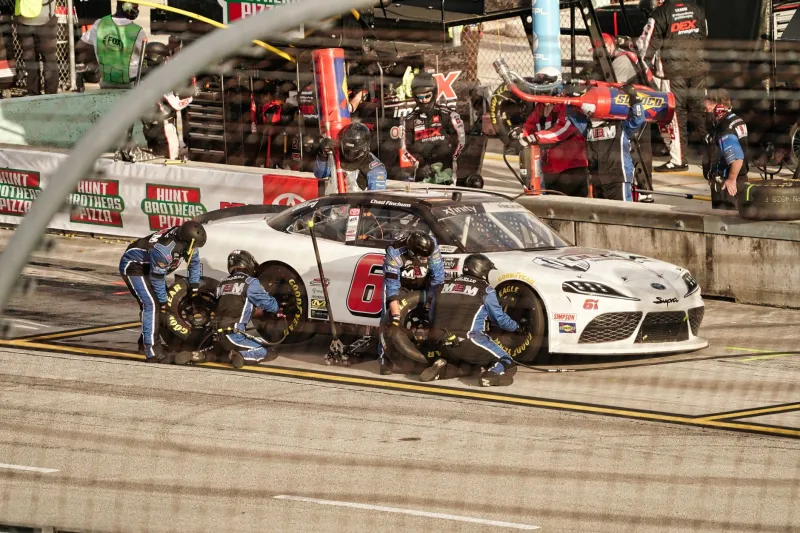
For most fans watching a race, the pit stop is a blur. Four tires swapped, fuel dumped in, driver back on track — all in under 12 seconds if everything clicks. It looks like controlled chaos. But inside the garages of the top NASCAR and IndyCar programs, what happens during those frantic seconds is the product of months of calculated, almost obsessive athletic preparation. And increasingly, the people driving that preparation aren't just strength coaches — they're movement scientists armed with force plates, high-speed cameras, and biomechanical data that would feel right at home in an NFL training facility.
This is the pit crew arms race, and it's changing the sport in ways most fans never see.
When Athletes Replaced Mechanics
There was a time, not all that long ago, when pit crew members were pulled straight from the shop floor. Guys who knew the car inside and out, who could swap a tire because they'd been doing it their whole lives. Strength and conditioning? That wasn't really part of the conversation.
That era is effectively over at the top level of American motorsports.
Today's elite over-the-wall crew members are recruited with the same intensity as college football players. Teams scout former wrestlers, gymnasts, baseball catchers, and defensive linemen — athletes whose movement profiles translate well to the explosive, precise demands of a pit stop. Once they're in the door, the real work begins.
"We're not just making these guys stronger," said one strength and conditioning coach who works with a top Cup Series program and asked not to be identified by name due to competitive sensitivity. "We're reprogramming how their bodies move. Every millisecond of inefficiency in a movement pattern is a millisecond lost on the clock."
The Science of Half a Second
Here's where it gets technical — and genuinely fascinating.
Biomechanics, at its core, is the study of how the body generates and transfers force. In a pit stop context, that means analyzing everything from how a tire carrier accelerates off the wall to the exact wrist angle a tire changer uses when seating a lug nut. High-speed cameras filming at 240 frames per second can reveal inefficiencies invisible to the human eye — a hip that rotates a fraction too late, a shoulder that dips unnecessarily, a step pattern that wastes ground contact time.
Teams are now running their pit crew athletes through full movement assessments that mirror what you'd find in elite sports performance labs. Force plates measure how much power an athlete generates on their first step off the pit wall. Motion capture systems track joint angles through every phase of a tire change. The data gets fed back to coaches who build individualized training programs designed to iron out those inefficiencies.
One performance director at a well-funded NASCAR team described it this way: "Think about how much time and money goes into aerodynamic development — wind tunnel hours, CFD simulations, all of it chasing hundredths of a second. We're doing the same thing with our pit crew athletes. The human body is just another system we can optimize."
Training Like Nobody Else Does
So what does a cutting-edge pit crew training program actually look like day-to-day?
It varies by role. Tire changers need a combination of grip strength, rotational power, and fine motor precision — an unusual blend that requires programming you won't find in any standard workout app. Their training often incorporates heavy rotational movements like landmine presses and cable chops, paired with hand speed drills borrowed from boxing training. The goal is to build explosive power in the hands and forearms without sacrificing the touch needed to feel a lug nut seat correctly at full speed.
Tire carriers, meanwhile, are closer to power athletes. They need to sprint short distances carrying 70-plus pound tires while maintaining enough body control to place them accurately under pressure. Their programs lean heavily on loaded sprint work, trap bar deadlifts, and deceleration training — because stopping quickly and transitioning smoothly is just as important as getting there fast.
Jackmen occupy their own unique athletic niche. The job demands a single explosive hip hinge movement repeated across a race weekend, which means both maximum power output and injury resilience. Coaches working with jackmen often incorporate Olympic lifting derivatives — hang cleans, kettlebell swings — to develop the rate of force development that makes a jack pump fast and consistent.
"The injury prevention piece is huge," noted one physical therapist embedded with a racing team. "These guys are doing the same violent movement patterns dozens of times a race weekend. If we don't manage load and recovery properly, we're looking at overuse injuries that can cost us when it matters most."
The Mental Layer Nobody Talks About
Biomechanics isn't just physical. The mental side of pit crew performance is getting serious attention too, and it connects directly to how movement science gets applied under race conditions.
Practice reps under controlled conditions are one thing. Executing the same movement patterns when 100,000 fans are screaming, the race leader is pitting, and a championship is on the line is something else entirely. Stress affects motor patterns — muscles tighten, breathing changes, fine motor control degrades. Elite teams are now working with sports psychologists to develop pre-stop routines that help athletes access their optimal physical state on command.
Visualization, controlled breathing protocols, and even heart rate variability monitoring are all showing up in how top programs prepare their crews mentally. The idea is simple: if you've trained your body to move a certain way, you need your mind to stay out of the way and let it happen.
The Competitive Gap Is Real
Here's the uncomfortable truth for smaller or underfunded teams: this level of investment creates a measurable performance gap that's hard to close with hustle alone.
A well-resourced program running full biomechanics assessments, individualized training, and dedicated sports science staff can consistently hit pit stop times that a team without those resources simply cannot match. Over the course of a 36-race season, those fractions of a second compound into track position, championship points, and ultimately, wins.
It's not unlike what's happened on the engineering side of the sport, where teams with the biggest simulation budgets have pulled ahead of those relying on traditional methods. The human performance side of racing is following the same trajectory.
For fans who love the technical side of motorsports, this is one of the most exciting frontiers in the sport right now. The cars keep getting faster, the margins keep getting tighter, and the people going over that wall keep getting more athletic, more prepared, and more precisely engineered for the job than ever before.
The race, it turns out, doesn't just start when the green flag drops. For the best teams in the business, it starts in the weight room.