Hot Under the Hood: Why Thermal Management Is Racing's Most Secretive Competitive Edge
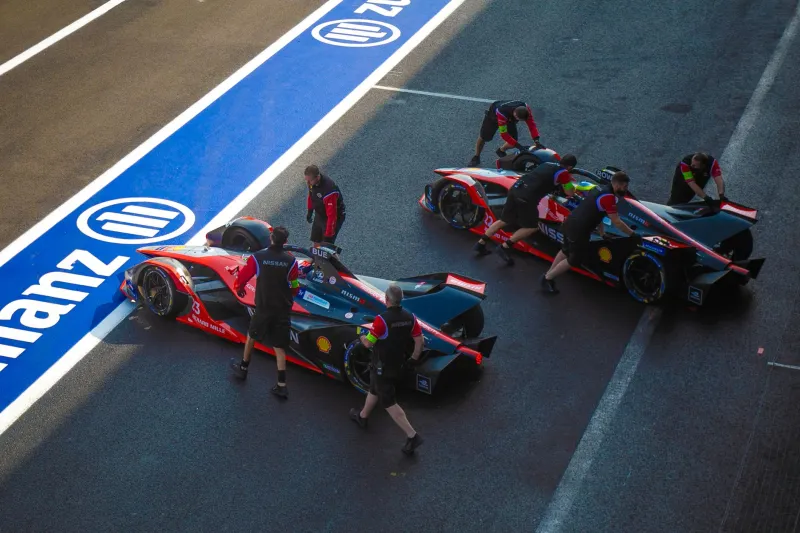
You're watching a race. Drivers are trading paint, crews are calling strategy, and the crowd is on its feet. But somewhere inside those machines — tucked behind carbon fiber panels and wrapped in layers of engineered insulation — a completely different competition is playing out. One that most fans never hear about, and that most teams would rather keep that way.
Welcome to the world of thermal management. It's not glamorous. It doesn't make the highlight reel. But right now, it might be the single most important battleground in competitive motorsports.
Heat Is the Enemy Nobody Talks About
Every internal combustion engine — and increasingly, every hybrid and electric racing powertrain — generates enormous amounts of heat. That's just physics. But in racing, where components are pushed to the absolute edge of their design tolerances for hours at a time, heat doesn't just reduce performance. It ends races.
Tire degradation is one of the most visible consequences. A tire running five degrees hotter than its optimal window can lose significant grip in just a few laps. Multiply that across a 500-mile event, and you're looking at strategy calls, extra pit stops, and potentially championships lost — all because of something the broadcast cameras can't show you.
Engines face the same math, just with higher stakes. Coolant temps that creep beyond safe thresholds force power reductions. Oil that runs too hot breaks down faster, increasing wear on components that cost tens of thousands of dollars to replace — if a replacement is even available mid-season.
And brakes? Brake fade at 180 miles per hour isn't a mechanical inconvenience. It's a safety crisis.
The Arms Race Happening in Plain Sight
Here's the thing about thermal management in modern racing: the teams doing it best aren't advertising it. It's one of those areas where competitive advantage is so clearly tied to secrecy that even engineers who've left organizations are reluctant to discuss specifics.
What we do know is that top-tier programs — from NASCAR Cup teams to IMSA prototype outfits — are investing heavily in real-time thermal monitoring systems. We're talking about sensor arrays that track dozens of temperature data points simultaneously, feeding information to engineers on pit lane who can make adjustments before a problem becomes a crisis.
Some teams are running predictive thermal models that simulate how a car's heat profile will change based on track conditions, ambient temperature, and even the specific line a driver is running through corners. If your car generates more heat scrubbing speed through Turn 3 than it does through Turn 7, your engineers want to know that — and they want to know it before you do.
Tires: Where Thermal Science Meets Race Strategy
No part of a race car is more temperature-sensitive than the tires, and no area of thermal research has attracted more investment in recent years.
Tire manufacturers like Goodyear — the longtime partner of NASCAR — work directly with teams to establish optimal operating temperature windows for each compound. But getting tires into that window, and keeping them there, is an art form that teams are increasingly trying to turn into a science.
Tire blankets are the obvious tool: pre-heating rubber before a pit stop to reduce the number of laps it takes to reach operating temp. But advanced teams go way further. They're studying how brake heat migrates into wheel hubs and then into tire sidewalls. They're analyzing how aerodynamic airflow — or the lack of it in traffic — affects surface temperatures on different parts of the contact patch.
Some programs are even experimenting with wheel designs that better dissipate heat away from brake components, protecting the tire from thermal contamination during heavy braking zones. That's not a small engineering challenge. It requires collaboration between aero departments, mechanical engineers, and materials scientists — all chasing a few degrees of improvement.
The Cooling System Isn't Just About the Engine Anymore
Traditionally, when racing engineers talked about thermal management, they mostly meant keeping the engine coolant and oil within safe ranges. That's still critical, but the definition of what needs to be thermally managed has exploded.
Hybrid systems carry high-voltage battery packs that have their own strict temperature requirements. Too cold, and energy delivery is sluggish. Too hot, and you're looking at degraded cell performance — or worse. Managing the thermal behavior of a hybrid powertrain in a racing environment, where energy harvesting and deployment happen in aggressive bursts, is an entirely different engineering challenge than anything teams faced a decade ago.
Electric racing series like Formula E have pushed this even further. In that world, thermal management of the battery system is essentially the whole ballgame. Teams that crack the code on keeping their battery packs in the sweet spot — especially in hot-weather races in places like New York or Jakarta — gain meaningful lap time advantages without touching aerodynamics or suspension setup.
Even in stock car racing, where the regulations are tighter and the technology is more constrained, clever thermal thinking shows up in unexpected places. Duct placement, underbody airflow design, heat shielding on exhaust routing — all of it gets studied, tested, and quietly optimized.
Why You'll Never See This on the Broadcast
Here's the irony of thermal management as a competitive weapon: it's most effective when it's invisible. A team that's nailing their thermal strategy isn't going to show up in the lap time data as dramatically as a new aero package or a bold pit strategy call. What it looks like, from the outside, is consistency. Cars that don't fall off the pace in the closing laps. Drivers who aren't complaining about loose handling because their tires have gone away. Engines that finish races they probably shouldn't have.
That consistency is worth an enormous amount in championship points. Ask any crew chief who's watched a rival fade in the final stage of a race while their driver was still running at full song.
The teams investing millions in thermal research aren't doing it for the headlines. They're doing it because the sport has gotten so competitive that traditional performance gains — more horsepower, better aero balance — have largely been regulated or engineered away. What's left are the marginal gains. And right now, temperature management might be the biggest marginal gain left on the table.
The Next Frontier
Looking ahead, the next evolution in racing thermal management is likely to come from artificial intelligence. Teams are already using machine learning to process the flood of sensor data their cars generate. Applying those same tools to thermal modeling — predicting how temperature will evolve across a stint based on real-time inputs — is a natural next step.
Some engineers are also looking at advanced materials: phase-change materials that absorb heat at specific temperatures, new ceramic coatings for exhaust systems, and even graphene-based thermal interface materials borrowed from aerospace applications.
It's a long way from the days when keeping a race car cool meant bolting on a bigger radiator and hoping for the best. Today, thermal engineering is a discipline unto itself — and the teams that master it are quietly stacking wins while everyone else is still looking at the stopwatch.
The heat is on. And in racing, that's never been more literally true.