The Legal Edge: Inside Racing's High-Stakes Game of Performance Optimization
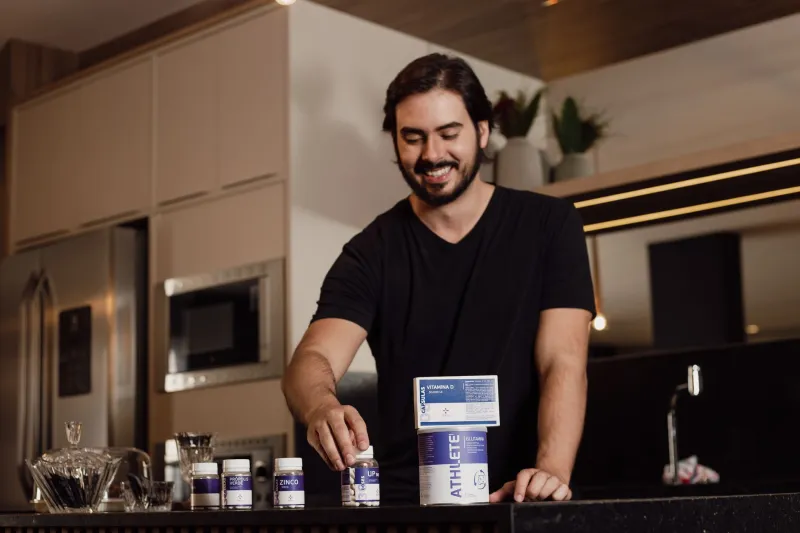
Somewhere between the garage and the grid, a quiet revolution is happening. It doesn't involve horsepower or aerodynamics. It's not about tire compounds or fuel mapping. It's about the human body — and the increasingly sophisticated science being used to wring every last drop of performance out of the people inside and around the race car.
Welcome to the gray zone.
The Team Doctor Is In — And They're Busy
Every serious racing operation in America today has some version of a performance staff. For the top-funded teams, that means full-time physicians, registered dietitians, and certified strength coaches embedded directly into the program. For smaller outfits, it might be a part-time consultant who shows up on race weekends with a cooler full of carefully labeled supplements and a tablet loaded with biometric data.
Either way, the science is getting serious.
"Five years ago, most teams were just telling drivers to eat a good breakfast and stay hydrated," says one team nutritionist who works with a multi-car NASCAR operation and asked not to be named because of contractual restrictions. "Now we're tracking sweat sodium levels, running individualized electrolyte protocols, and timing carbohydrate intake down to the minute before a driver straps in."
That level of precision isn't accidental. It's a direct response to a competitive environment where fractions of a second separate the winners from the also-rans — and where mental clarity at lap 450 of a 500-lap race can be the difference between a trophy and a totaled car.
What's Actually on the Label
The supplement landscape in professional motorsports is a minefield. Unlike stick-and-ball sports, racing doesn't have a single unified banned substance list that applies across all series. NASCAR, IndyCar, IMSA, and the various regional touring series each operate under their own frameworks — and those frameworks vary significantly in specificity and enforcement.
That ambiguity creates opportunity. And teams are exploiting it methodically.
Caffeine is the most obvious example. It's legal, widely used, and genuinely effective for maintaining alertness during long events. But the delivery method, timing, and dosage are increasingly being customized at the individual level. Some teams are working with sports pharmacologists — yes, that's a real specialty — to develop driver-specific caffeine protocols that account for genetic differences in metabolism. One driver might process caffeine twice as fast as another, meaning a standard pre-race dose could leave them crashing hard mid-event while a teammate is still running sharp.
Beyond caffeine, the list gets more interesting. Adaptogens like ashwagandha and rhodiola are showing up in crew member routines to manage the cortisol spikes that come with extended race weekends. Ketone esters, once the exclusive domain of elite cyclists and military special operations units, are being quietly evaluated by at least a handful of top-tier teams as a fast-acting cognitive fuel source. And peptide-based recovery compounds sit in a genuinely murky regulatory space that even the series officials seem uncertain about.
"The rules were written before a lot of this stuff existed," one team physician told us bluntly. "So you end up in these conversations where nobody's really sure what's allowed and what isn't. And in that vacuum, the teams with the best science staff and the most aggressive legal counsel tend to find the most room to operate."
The Crew Doesn't Get a Pass Either
Driver optimization gets most of the attention, but the performance enhancement conversation extends well past the cockpit. Pit crews — already among the most physically trained athletes in American sport — are being subjected to increasingly sophisticated protocols designed to optimize their performance during the critical seconds they spend over the wall.
Recovery between stops is a big focus. Teams are experimenting with targeted compression therapy, percussive massage devices, and breath-work protocols designed to rapidly lower heart rate and restore fine motor control after the explosive exertion of a pit stop. Some crews are working with sports psychologists to develop cognitive reset routines — quick mental exercises that help a tire changer clear the adrenaline fog between stops and execute the next one with clean focus.
Hydration science is particularly advanced on the crew side. Sweat testing at the start of race weekends allows teams to build individualized electrolyte replacement plans that account for the specific conditions — temperature, humidity, physical demand — of each event. A crew member who's properly sodium-loaded for a hot August race in Bristol is going to perform meaningfully better in the final 50 laps than one who's been drinking generic sports drinks all afternoon.
Where the Line Gets Blurry
Here's the uncomfortable part: not everyone in the paddock thinks this is all above board.
Some team managers, particularly those running on tighter budgets, are openly frustrated that performance optimization has become another arena where financial resources translate directly into competitive advantage. "If you've got a full-time sports medicine staff and a six-figure supplement budget, you're basically running a legal doping program," one independent team owner said, not entirely joking. "And the rest of us are just trying to keep up."
There's also a more pointed concern about the gray-zone compounds — the peptides, the novel recovery agents, the experimental protocols that exist in regulatory no-man's-land. A handful of drivers and crew members have reportedly failed internal team screenings for substances they didn't even know they were taking, the result of contaminated supplement batches or poorly disclosed ingredients. In a sport where a positive test can end a career, that's not a minor issue.
The series themselves have been slow to respond. Updating banned substance lists is a resource-intensive process, and the science moves faster than the rulebooks. In the meantime, teams are essentially self-policing — which is to say, they're doing whatever they can get away with until someone tells them to stop.
The Ethical Conversation Nobody Wants to Have
Most of the team doctors and nutritionists we spoke with are genuinely committed to keeping their programs clean. They're not trying to cheat — they're trying to win, and they believe the line between those two things is clear. Optimize legally, compete hard, respect the spirit of the rules.
But the sport probably needs a more honest conversation about where that line actually sits. As performance science advances and the tools for human optimization become more powerful, the current patchwork of regulations is going to struggle to keep up.
The teams with the deepest pockets and the sharpest science staffs will keep finding edges. The series will eventually catch up — or they won't. And somewhere in the middle, the drivers and crew members whose bodies are the actual testing ground for all of this will keep doing what they've always done: trusting the people in their corner and hoping the science is as clean as they're told it is.
In racing, as in most things, the real competition isn't just on the track. It never has been.