The Hit Nobody Talks About: Racing's Hidden Concussion Problem Is Bigger Than Anyone Wants to Admit
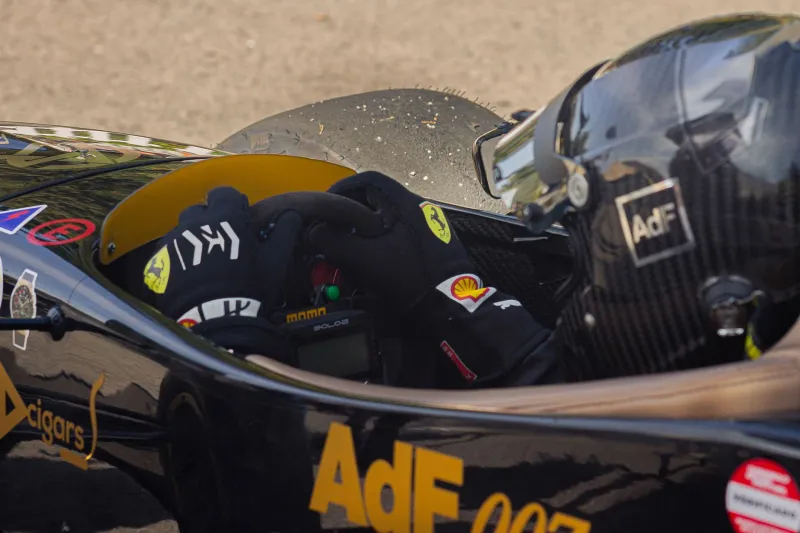
There's a version of driver safety that looks great on a press release. Upgraded HANS devices. Carbon fiber tubs engineered to absorb catastrophic energy. SAFER barriers lining the walls of major oval tracks. When a driver walks away from a 200-mph wreck on national television, the industry points to those innovations and calls it a win.
But there's another version of driver safety — one that doesn't make the highlight reel — and it's playing out in neurologist offices, retirement announcements, and quiet conversations between former racers who aren't quite sure why they can't remember things the way they used to.
Racing has a concussion problem. And for a sport obsessed with milliseconds and margins, it's been remarkably comfortable ignoring it.
The Hits You Never See Coming
Most people associate concussions in racing with the obvious stuff — the barrel rolls, the wall impacts, the fireballs. And sure, those events carry real risk. But sports medicine researchers who've studied motorsports have increasingly flagged something more insidious: the cumulative effect of subconcussive impacts.
Every time a driver takes a corner at high speed, their head is being pushed by lateral G-forces that can exceed 3 to 5 Gs in certain series. Over the course of a race weekend — practice, qualifying, the race itself — that's hundreds of repetitive loading events on the brain. None of them individually dramatic. All of them adding up.
"People think of a concussion as something that happens when you hit the wall," one former regional circuit driver told us, asking to remain anonymous because he still works in the industry. "Nobody told me that just driving was doing damage. I thought I was fine because I never had a big one."
He retired in his early thirties. He now deals with chronic headaches, short-term memory gaps, and sensitivity to light that his doctors believe are consistent with cumulative traumatic brain injury.
He is not alone.
What the Protocols Actually Look Like — Or Don't
Here's where things get uncomfortable. Unlike the NFL, which — after years of denial and litigation — now operates under mandatory concussion protocols with independent neurological consultants at every game, American motorsports has no unified standard.
Different sanctioning bodies handle head injuries differently. Some have made genuine progress. NASCAR has invested in in-car accelerometer data and has protocols that can pull drivers from competition after significant impacts. IndyCar has implemented medical reporting structures that have improved over the past decade.
But below the top tier? It gets murky fast.
At the regional, club, and amateur levels — where hundreds of thousands of American racers compete every weekend — there is often no concussion protocol at all. A driver can clip a wall hard enough to see stars, sit in the car for a few minutes, tell the corner worker they're fine, and be back on track before the caution period ends.
No baseline cognitive testing. No mandatory evaluation window. No independent medical sign-off.
"The culture is to get back in the car," says a motorsports physician who has worked with multiple series and asked not to be identified by name. "Admitting you got your bell rung feels like weakness. Drivers are terrified that if they flag a head injury, they'll lose their ride. So they don't flag it. And nobody's forcing them to."
The Long Game Nobody Wants to Play
The science on traumatic brain injury has evolved dramatically over the past twenty years, driven largely by the NFL concussion lawsuits and subsequent research into CTE — Chronic Traumatic Encephalopathy. The findings are sobering: repeated brain trauma, even without loss of consciousness, can trigger progressive neurological deterioration that doesn't show up for years or decades.
Researchers at several universities have begun studying motorsports athletes specifically, and while the dataset is still relatively small compared to football or hockey, early findings suggest that long-career drivers show neurological markers consistent with repeated head trauma at rates higher than the general population.
What makes this particularly difficult in racing is the multi-variable nature of the exposure. A driver's risk profile looks completely different depending on what series they run, what tracks they compete on, what car they drive, and how many years they've been at it. A short-track oval racer in the Southeast logging 40 weekends a year is living in a very different neurological environment than a road course driver doing eight events annually.
But the sport hasn't built the infrastructure to track any of that systematically.
Former Drivers Are Starting to Speak Up
Slowly — and often reluctantly — some former racers have begun going on record about cognitive symptoms they believe are connected to their time behind the wheel.
A veteran of multiple national touring series described to us the experience of standing in his garage two years after retirement and forgetting, mid-sentence, what he was trying to say. "It wasn't a one-time thing," he said. "It kept happening. Still does. I'm in my forties and I feel like my brain is running on a bad connection."
Another former driver described being diagnosed with anxiety and depression after retiring, only to later learn from a specialist that some of what he was experiencing was consistent with neurological injury rather than purely psychological causes. "I spent two years thinking I was just struggling with life after racing," he said. "Turns out it might be more complicated than that."
Neither man received any formal neurological screening during their active careers. Neither was aware of any protocol that would have caught what was happening.
What Needs to Change
The path forward isn't complicated to describe, even if it's hard to execute. Standardized baseline cognitive testing for licensed competitors. Mandatory independent evaluation after significant impacts. A reporting structure that protects drivers from losing rides when they disclose symptoms. Long-term neurological monitoring for career racers. And critically — funding for research that maps the actual exposure levels across different series and disciplines.
The NFL didn't get there willingly. It got there because the evidence became undeniable and the legal and public pressure became impossible to ignore. Racing doesn't have to wait for that moment.
"The sport has shown it can move fast when it wants to," says the motorsports physician we spoke with. "The safety improvements of the last twenty years are genuinely remarkable. This is the next frontier. The question is whether the industry gets ahead of it or gets dragged to it."
At Harvick Motorsports, we believe that being built for speed means being built to last — and that includes the people behind the wheel. The helmets have gotten better. The walls have gotten smarter. Now it's time to take the same energy and point it at what's happening inside the helmet.
Because the most dangerous hit in racing might be the one nobody's counting.