All In: The Owner-Operators Risking Everything for a Shot at Racing Glory
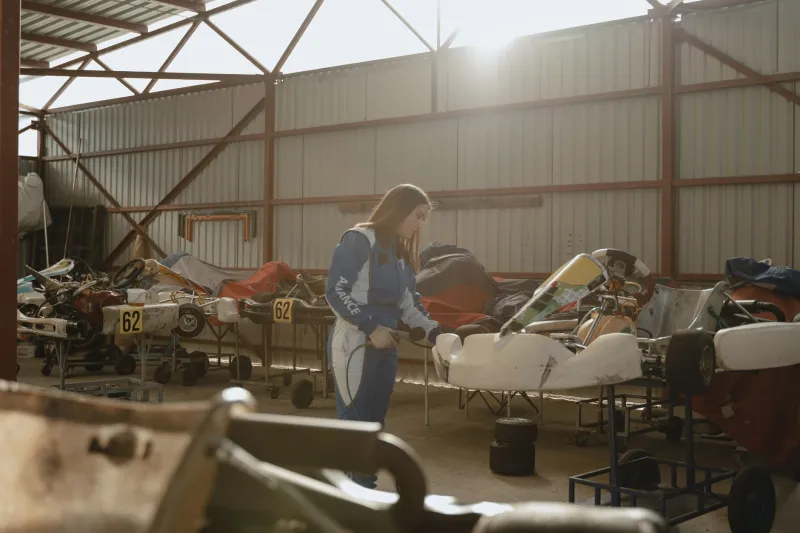
There's a moment — usually somewhere around 2 a.m. in a cold garage, staring at a credit card statement — when most people would walk away. Most people. But the owner-operators who fund, build, and drive their own racing programs aren't most people. They're a specific, stubborn, beautiful kind of crazy, and the American motorsports landscape is quietly full of them.
We spent the better part of a race season with three of these individuals, tracking their wins, their losses, and the moments in between when the weight of the gamble gets almost too heavy to carry. What we found wasn't just a story about racing. It was a story about identity, obsession, and what happens when a dream collides with a spreadsheet.
Meet the Gamblers
Derek Calloway runs a late model stock car out of a two-bay shop in rural North Carolina. He's 41, owns a small HVAC business, and has been quietly draining his personal savings account for the better part of five years to keep his racing program alive. His wife knows the broad strokes. She doesn't know the exact numbers.
"I told her we were doing fine," he says, not making eye contact. "We're doing fine enough. The car's fast. That's what matters right now."
Sandra Vega is 34, based outside of Phoenix, and campaigns a spec Miata in regional road course events. She works two jobs — paralegal during the week, bartender on weekends — and her race car lives in a rented storage unit because she doesn't have a garage. Her budget for an entire season is roughly what a top-tier team spends on tires for a single event.
Tommy Briggs is the veteran of the group at 53. He ran semi-professionally in his thirties, walked away when his kids were born, and came back five years ago with his retirement fund and a rebuilt Camaro that he'll tell you is "basically done" even though it's never actually done. He's finished in the top five at his regional series twice this year. He's also had to take out a second mortgage.
Three people. Three wildly different circumstances. One shared, consuming obsession.
The Math Nobody Talks About
The economics of grassroots racing are brutal in a way that outsiders rarely appreciate. Entry fees, tires, fuel, travel, lodging, parts, safety equipment, sanctioning body memberships — it stacks up fast. Derek estimates he spends between $60,000 and $80,000 per season when everything is counted honestly. Sandra stretches her much smaller budget through obsessive frugality, buying used tires from faster competitors and doing every ounce of her own mechanical work. Tommy doesn't like to give a number, but the second mortgage says enough.
None of them have sponsors in any meaningful sense. Derek has a decal from a buddy's landscaping company. Sandra got a $500 contribution from a local auto parts store. Tommy has nothing on his car except paint.
The sponsorship gap between grassroots owner-operators and even modestly funded regional teams is staggering. Without corporate backing, these programs exist entirely on personal capital — and personal capital has a hard limit.
"You do the math and it doesn't work," Sandra says flatly, sitting on her car's rear bumper between sessions. "I know it doesn't work. I do it anyway."
The Psychological Weight
What doesn't show up in the budget spreadsheets is the mental load. Running your own racing program means you're the owner, the crew chief, the driver, the PR department, the accountant, and the therapist — all at once. When something breaks on Saturday morning, there's no one else to call. You figure it out or you don't race.
Derek describes a moment mid-season when his transmission failed during practice at a track four hours from home. He sat in the car for a long time before he got out. "I just needed a minute," he says. "Because I knew what fixing it was going to cost, and I knew I was going to do it anyway, and I just needed a minute to be angry about that before I started making calls."
The psychological research on entrepreneurial risk-taking — and make no mistake, owner-operators are entrepreneurs — consistently shows that the sunk cost fallacy is a powerful force. The more you've already invested, the harder it becomes to stop, even when the rational move is to walk away. For people who've tied their identity to a racing program, the emotional stakes compound the financial ones in ways that can quietly wreak havoc on mental health, relationships, and long-term financial security.
Tommy's wife left him briefly two years ago. She came back. He says they don't talk about the car as much as they used to.
When It Doesn't Pay Off
Not everyone makes it to the end of the season intact. Sandra blew an engine in August — a catastrophic failure that effectively ended her year and wiped out what little financial cushion she'd built up. She sat in the paddock after the tow-in, methodically taking inventory of what the repair would cost versus what she had, and concluded that she was done for 2024.
"I'll be back," she says. Not defensive. Just certain.
That certainty — that unshakeable, somewhat irrational certainty — is maybe the defining characteristic of everyone in this story. The losses don't seem to register as reasons to stop. They register as problems to solve before next season.
Derek finished fourth in points in his regional series. Not a win, but a respectable showing. He's already planning upgrades for next year that he hasn't figured out how to pay for yet.
Tommy had his best season in recent memory, cracking the top five twice and winning one race outright on a short track in Tennessee. He described the moment he crossed the finish line as the best feeling of his life, then immediately clarified: "Well. Top three, anyway." He's refinancing the second mortgage.
What Keeps Them Coming Back
Ask any of these three why they keep doing it, and the answers circle around the same core thing: the track is the one place where everything else disappears. The bills, the stress, the compromises of regular adult life — none of it exists when the green flag drops.
For Sandra, it's about proving something she can't fully articulate but feels deeply. For Derek, it's the only space in his life that's entirely his own. For Tommy, it's about reclaiming a version of himself he thought was gone for good.
Racing has always attracted people who are willing to bet big for that feeling. The owner-operators are just betting with their own money, on their own terms, with no safety net except their own stubbornness.
That's not crazy. That's just racing.
And if you've ever stood at the fence and felt the vibration of an engine in your chest, you already know exactly why they can't stop.