Dream, Grind, Quit: The Hidden Price Tag of Chasing a Pro Racing Career in America
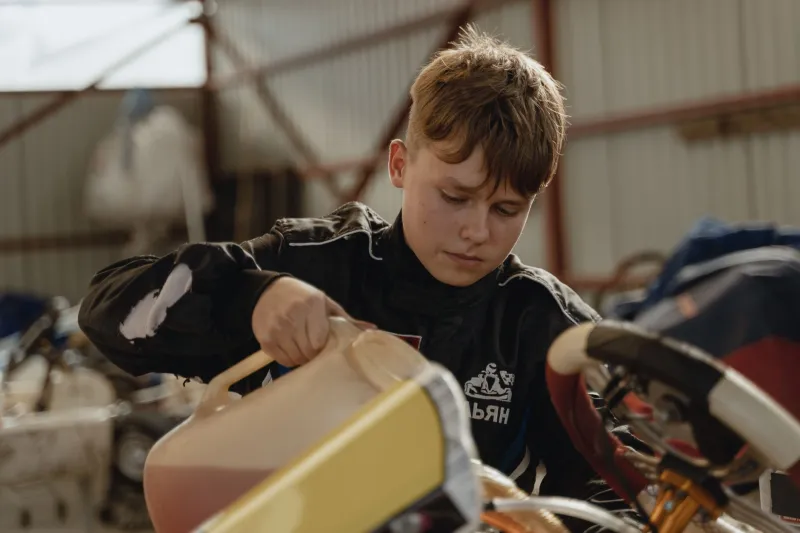
There's a version of the story everyone loves. Kid grows up obsessed with racing, wins a few kart titles, catches the eye of the right people, and eventually finds himself standing on a podium with a sponsor's check in hand. It's the story racing sells. It's also the exception, not the rule.
For every driver who makes that climb, there are dozens — maybe hundreds — of equally talented young racers who never get their shot. Not because they lacked speed. Not because they didn't put in the work. But because somewhere along the way, the money ran out, the sponsorship never came through, or the mental weight of it all just became too much to carry.
This is the side of American motorsports that doesn't get a highlight reel.
The Numbers Nobody Wants to Say Out Loud
Let's start with the basics. Competing seriously in junior karting — the traditional first rung of the racing ladder — can run a family anywhere from $30,000 to $80,000 a year once you factor in equipment, entry fees, travel, coaching, and the inevitable mechanical repairs. And that's just to be competitive at a regional level. Step up to national karting programs or entry-level formula series, and you're looking at six figures annually before a single wheel turns in anger.
By the time a young driver is ready to transition into something like USF Juniors or the Road to Indy pathway, the costs have escalated dramatically. A single season in a developmental open-wheel series can cost a family $150,000 to $300,000 or more — and that's with a team doing the heavy lifting on the operational side.
Mike Callahan, a motorsports business consultant who has worked with junior programs across the Midwest, puts it plainly: "The talent pool in American junior racing is genuinely deep. But the financial filter is brutal. I've watched kids who were legitimately faster than drivers currently running in top-tier series have to step away because their families simply couldn't sustain the burn rate."
What Sponsorship Actually Looks Like at the Junior Level
The word "sponsorship" gets thrown around a lot in racing circles, and it can create a misleading picture for families just entering the sport. At the elite level, yes, sponsors write big checks. But at the junior level? It's a very different conversation.
Most junior racers are essentially selling small advertising packages to local businesses — a decal on the door panel in exchange for a few thousand dollars. It helps, but it doesn't move the needle in any meaningful way against six-figure annual budgets. And the pressure on young drivers and their families to hustle for those dollars is relentless.
Sarah Montoya spent four years managing the racing career of her son, Diego, who was competitive in regional karting and showed genuine promise in a regional Formula car series. "We were good at the sponsorship side, honestly," she says. "Diego would show up to meetings, shake hands, do everything right. But we were always chasing. Every off-season was about whether we could cobble together enough to run a full schedule the following year. It was exhausting for all of us."
Diego stepped back from competitive racing at 17, two years before he might have had a real shot at attracting professional management interest. He now works in automotive tech. He doesn't talk about racing much.
The Mental Load Nobody Prepares You For
The financial pressure is well-documented among those inside the sport, even if it rarely makes headlines. Less talked about is the psychological toll — on the drivers themselves and on the families supporting them.
Young racers are under an almost impossible amount of pressure. They're expected to perform at a high level every weekend while also acting as the face of a small fundraising operation, keeping sponsors happy, maintaining their social media presence, and somehow still attending school. The margin for error — on track and off — feels razor-thin at all times.
Dr. Renee Alvarez, a sports psychologist who has worked with several junior motorsports programs, says the burnout she sees in young racers often goes unaddressed. "Racing culture has traditionally valued toughness above all else. Admitting that you're struggling mentally — that the pressure is getting to you — can feel like career suicide at a junior level. So these kids just white-knuckle it until they can't anymore."
Parents, too, absorb an enormous amount of stress. Retirement accounts get raided. Second mortgages happen. Marriages strain under the financial pressure. And when a child eventually walks away from the sport — whether by choice or necessity — families are often left to process not just the grief of a dream deferred, but very real financial damage.
The Gatekeeping Nobody Talks About
Beyond money and mental health, there's another layer to this story that insiders acknowledge quietly but rarely on the record: the sport's informal networks heavily favor those who already have access.
Driving talent matters, obviously. But so does knowing the right team manager, having a father who raced, or growing up in a region where karting infrastructure is strong. Kids from rural areas or communities without established racing scenes often start the climb already several rungs behind their peers — not in ability, but in exposure and opportunity.
"I've seen kids from small towns in places like rural Ohio or central Texas who were absolutely flying in regional competition," says Callahan. "But they didn't have the connections, didn't have the coaching network, didn't have a mentor who could get them in front of the right people at the right time. Talent without a pathway is just potential that never gets realized."
So What Can Actually Change?
There's no easy fix here. The economics of motorsport are what they are, and the ladder system isn't going to be restructured overnight. But there are people working on pieces of the puzzle.
A handful of nonprofit organizations have emerged in recent years specifically to provide scholarships and financial support to promising junior drivers who lack the resources to self-fund. Manufacturer-backed development programs occasionally identify and subsidize exceptional talent. And the growing visibility of sim racing has created at least one alternative pathway for drivers who might not have the budget to compete on track but can demonstrate their ability behind a wheel in a virtual environment.
But these solutions remain the exception. For most families navigating junior racing in America right now, the financial calculus is unforgiving and the support systems are thin.
Raw Talent Is Just the Entry Fee
The hardest truth in all of this is one that nobody in the racing world particularly enjoys saying: talent gets you in the door, but money keeps you in the building. The fastest kid in the field doesn't always get the ride. The kid whose family can write the check does.
For every driver currently competing at the top levels of American motorsport, there are ghosts of the racing ladder — young men and women who were every bit as fast, every bit as dedicated, but who hit a financial wall they couldn't climb over. Their stories don't get told at victory lane. Their names don't show up in the record books.
But they were here. They were real. And the sport is poorer for losing them.