Still Got It: Why Racing's Veteran Drivers Are Rewriting the Rules on Age and Performance
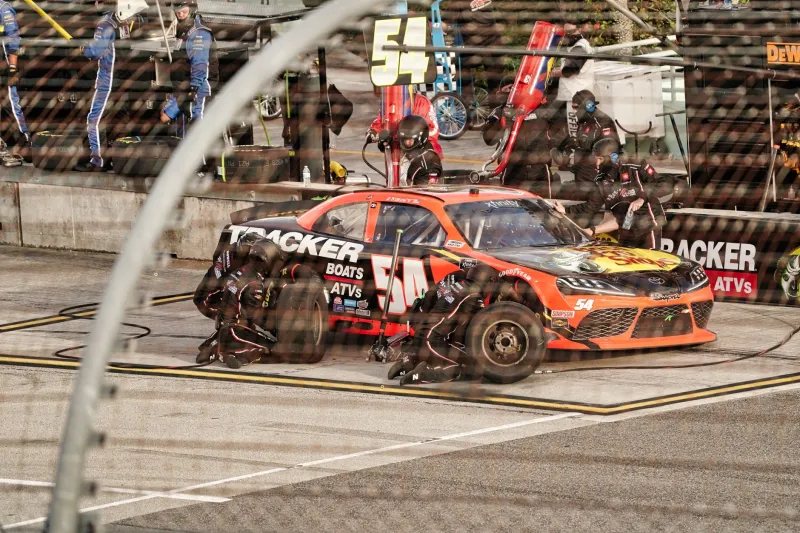
For most of motorsports history, the conversation around aging drivers followed a pretty predictable script. A guy hits his late thirties, the wins start drying up, and the paddock whispers begin. "He's lost a step." "The reflexes aren't what they used to be." "Time to make room for the young guns."
But something interesting has been happening over the past decade or so—and it's changing the way teams, sponsors, and fans think about what it actually means to be a competitive racing driver at the highest level. Veteran drivers aren't just hanging on. Some of them are genuinely getting better.
The Old Assumptions Don't Hold Up Anymore
For a long time, the conventional wisdom in American racing was pretty simple: peak in your late twenties, have your best years in your early thirties, and start winding down from there. The logic made sense on the surface. Reaction times slow with age. The physical toll of a 500-mile race becomes harder to recover from. Young drivers are hungrier, more aggressive, more willing to take risks.
Except that framing misses a huge part of what actually wins races. Reaction time is one variable in a system with thousands of moving parts. And it turns out that the variables where experience pays the biggest dividends—racecraft, tire management, mechanical feedback, situational awareness, managing a team relationship over a long season—don't peak in your late twenties. They might not even peak in your thirties.
"What we've learned is that the brain's ability to process complex, high-stakes environments doesn't deteriorate the way people assumed," says Dr. Mara Tillson, a sports scientist who has worked with several professional motorsports programs. "Elite drivers are essentially running pattern recognition software that gets more sophisticated with every race they complete. That's not something a 24-year-old can replicate just by being fast."
What the Science Actually Says
The research on athletic aging has evolved dramatically over the past two decades. Studies that used to focus almost exclusively on physical markers—VO2 max, reaction speed, muscle recovery—now account for cognitive performance, emotional regulation, and what researchers call "adaptive expertise."
In plain terms: experienced athletes often make better decisions under pressure, not because they're faster, but because they've seen more situations and their brains have built more efficient shortcuts for processing them.
For a racing driver, that translates directly to the track. Knowing when to push and when to save tires. Reading traffic in a way that avoids incidents before they develop. Managing a pit strategy in real time while also keeping the car on the ragged edge of grip. These aren't things you learn from a simulator session. They accumulate over thousands of miles of real-world competition.
"Experience is literally a physical thing in the brain," Dr. Tillson explains. "The neural pathways formed by years of high-level competition are an asset that doesn't show up on a stopwatch, but it absolutely shows up in race results."
Fitness Redefined for the Long Haul
Of course, none of that cognitive advantage matters if a driver can't physically hold up over the course of a grueling season. And this is where the evolution of elite athlete training has made the biggest practical difference for veteran racers.
The old model of motorsports fitness was pretty basic—some cardio, some neck strengthening, maybe a little general gym work. Today's top-level programs look nothing like that. Veteran drivers who are committed to extending their careers are working with physiologists, nutritionists, and recovery specialists who design programs specifically around the demands of racing at 40-plus.
Heat tolerance training, for example, has become a major focus. Cockpit temperatures in stock cars can exceed 130 degrees Fahrenheit during a summer race. Managing that physiological stress over a three-to-four hour event is genuinely exhausting, and it's an area where disciplined preparation can offset a lot of the natural physical decline that comes with age.
Sleep science has also become a serious tool. Teams are increasingly using sleep monitoring technology to optimize recovery between race weekends, and veteran drivers who commit to that kind of structured recovery often report feeling more physically sharp at 42 than they did at 32, when they were running harder schedules without the same attention to rest.
The Mental Edge That Money Can't Buy
There's another dimension to veteran driver performance that doesn't get talked about enough: the psychological infrastructure that comes from having been through everything the sport can throw at you.
Young drivers are fast. They're fearless. They're also, in many cases, one bad stretch of results away from a crisis of confidence that can derail an entire season. The mental resilience required to push through a mid-season slump, handle the pressure of a championship battle, or come back strong after a serious accident—that kind of psychological durability is built over years, not months.
Team principals across American racing have started acknowledging this openly. "When I'm putting together a program, I'm not just looking at lap times," said one NASCAR team principal who asked not to be identified by name. "I'm looking at who I want in that car when everything goes sideways at lap 350 of a 500-lap race. That's usually the guy who's been there before."
The Shift in Industry Attitude
Perhaps the most significant change isn't on the track at all—it's in the front offices and sponsor suites. For years, the commercial side of racing pushed toward youth. Younger drivers were seen as more marketable, more aligned with the demographics brands were chasing.
But that calculus has started to shift. Veteran drivers bring something that younger competitors simply can't: a proven track record of performing under pressure and a fan base built over decades of loyalty. In a media landscape where authenticity matters more than ever, a driver whose story spans twenty-plus years of competition carries a different kind of weight.
There's also the matter of consistency. Sponsors invest in drivers who are going to represent their brand professionally across a long season. Experience tends to correlate with that kind of reliability.
What It All Means Going Forward
The drivers who are successfully extending their competitive careers into their forties aren't doing it by accident. They're combining the kind of physical preparation that simply wasn't available to previous generations with a commitment to mental conditioning and the kind of honest self-assessment that tells them when to push and when to manage.
For the next generation of young American racers watching from the junior ranks, that's actually an encouraging message. The ceiling in this sport isn't where anyone thought it was. With the right approach, the right team around you, and a genuine passion for keeping pace with what the sport demands, the competitive window is longer than it's ever been.
Age, it turns out, is just one variable in a very complicated equation. And right now, experience is winning the math.