Running on Fumes and Faith: The Financial Reality of American Racing Teams
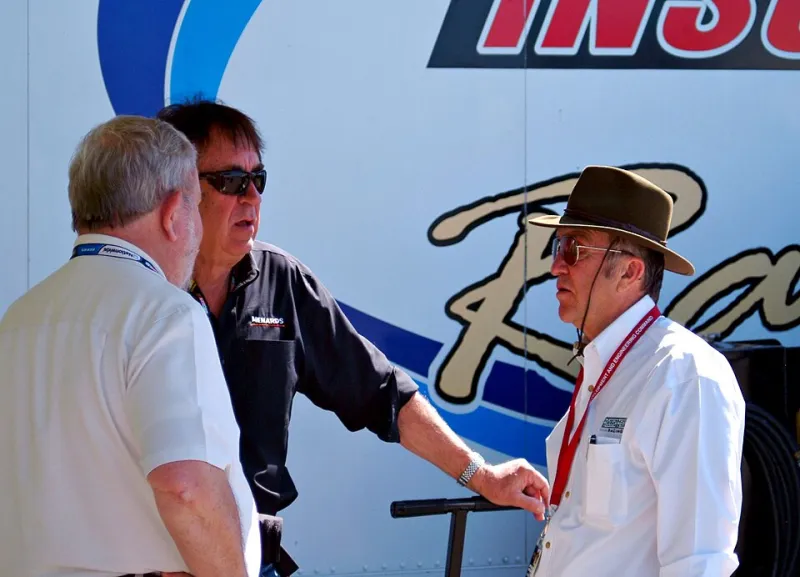
Photo: SpeedProPhoto, CC BY 2.0, via Wikimedia Commons
The hauler pulls into the track on Thursday morning looking sharp. The crew is sharp. The car looks sharp. What you don't see is the team owner who spent the past three weeks cold-calling potential sponsors, renegotiating a parts deal, and quietly moving money between accounts just to make sure the weekend could happen at all.
This is the unglamorous side of American motorsports, and it's a story that doesn't get told nearly enough.
We reached out to team owners, general managers, and business directors across NASCAR's lower series, IndyCar's mid-pack, and the regional short-track scene to get a real, unfiltered look at what it actually costs to go racing in the United States — and what happens when the math doesn't work.
The Budget Gap Nobody Talks About
Let's start with some context. At the very top of the food chain, a competitive NASCAR Cup Series season can run anywhere from $15 million to well north of $30 million per car. IndyCar's top programs aren't far behind. Those numbers are eye-watering, but they at least come with major corporate backing, network TV exposure, and enough brand value to attract Fortune 500 partners.
Drop down a level or two, though, and the math gets genuinely brutal.
"We ran a full Truck Series season on $2.8 million," one team owner told us, leaning back in his chair with the kind of tired smile that comes from surviving something difficult. "That sounds like a lot of money until you realize what it actually costs to be competitive. We were basically racing with one hand tied behind our back the whole year."
At the regional and short-track level, teams operate on budgets that would barely cover a single Cup race weekend. Entry fees, tire bills, travel costs, crew pay, equipment maintenance — it adds up fast. Many of these teams are run by owners who also work day jobs, pouring personal income into the operation because they love the sport too much to walk away.
Sponsorship: The Lifeblood Nobody Can Guarantee
For mid-tier and grassroots teams, sponsorship isn't just helpful — it's existential. Without it, there is no team. And the sponsorship landscape in American motorsports has shifted dramatically over the past decade.
The era of a single title sponsor writing one big check and disappearing until next season is largely over. Today's sponsorship deals are more complex, more performance-linked, and more demanding in terms of social media deliverables, hospitality commitments, and measurable return on investment.
"Sponsors want to know what they're getting," explained a general manager who oversees partnerships for a mid-level NASCAR team. "They want impressions, they want engagement data, they want to know their logo is going to be seen by the right eyeballs. It's not enough anymore to just put their name on the hood and go fast."
For smaller teams without dedicated marketing staff, meeting those demands while also running a race operation is a serious juggling act. Some teams have started hiring part-time marketing consultants specifically to manage sponsor relationships and produce content — an added cost that eats into an already-thin budget, but one that's increasingly necessary just to keep partners happy.
The Creative Financing of Staying Alive
What's remarkable — and honestly kind of inspiring — is how resourceful smaller teams have become when it comes to keeping the operation funded.
Driver investment is one of the most common models at the regional and lower-series level. A driver with personal backing or family money brings capital to the team in exchange for a seat. It's a transaction that works for everyone when the driver is talented enough to perform, but it creates a complicated dynamic when results don't follow.
"You're essentially balancing two things that don't always go together," one team owner admitted. "You need the money the driver brings, but you also need the results that attract better sponsors. Sometimes those two things point in the same direction. Sometimes they really don't."
Other teams have gotten creative with shared resources — pooling equipment with rival teams, co-leasing shop space, or establishing informal parts-sharing agreements that would probably surprise the fans who see those teams competing against each other on Saturday night.
There's also a growing trend of teams building out merchandise and content operations as supplemental revenue streams. A popular driver with a strong social following can generate real income through direct-to-fan merchandise, Patreon-style memberships, and YouTube content — income that used to not exist and now helps keep the lights on.
Strategic Partnerships: The New Sponsorship Model
Perhaps the most interesting shift happening right now in the business of American racing is the evolution from traditional sponsorship toward genuine strategic partnership.
Rather than a company simply buying ad space on a race car, some teams are building relationships where both parties contribute meaningfully to each other's business. A regional auto parts supplier doesn't just put their logo on the quarter panel — they get access to the team's engineering data to improve their product line. A performance tech company doesn't just write a check — they use the team as a real-world testing environment for new components.
"When it's a real partnership, both sides fight to make it work," said one team principal who's built his operation almost entirely on this model. "When it's just a sponsorship, the moment results dip or the economy tightens, you're the first line item to get cut."
This shift is particularly pronounced at the grassroots level, where teams often can't offer the broadcast exposure that justifies traditional sponsorship spending. What they can offer is authentic community connection, local brand loyalty, and the kind of genuine fan engagement that larger corporate partnerships sometimes struggle to replicate.
What Keeps Them Going
Here's the thing about the people who run these teams: almost none of them got into racing because they thought it was a smart business decision. They got into it because they couldn't imagine doing anything else.
The team owner who spent three weeks chasing sponsors before a race weekend? He was at the track by 6 a.m. on Friday morning with a coffee in his hand and a grin on his face. The general manager wrestling with budget spreadsheets on a Tuesday night? She'll be the first one over the pit wall wall if the team needs her on Sunday.
Racing gets into people, and it doesn't let go easily. The financial pressures are real, the margins are razor-thin, and the uncertainty is constant. But somewhere between the sponsor calls and the parts negotiations and the long drives home after a tough weekend, there's still a race car doing what it was built to do.
And for the people who build them, fund them, and field them every weekend, that's still more than enough reason to keep going.