Seconds That Cost Championships: The Inside World of Pit Crew Excellence
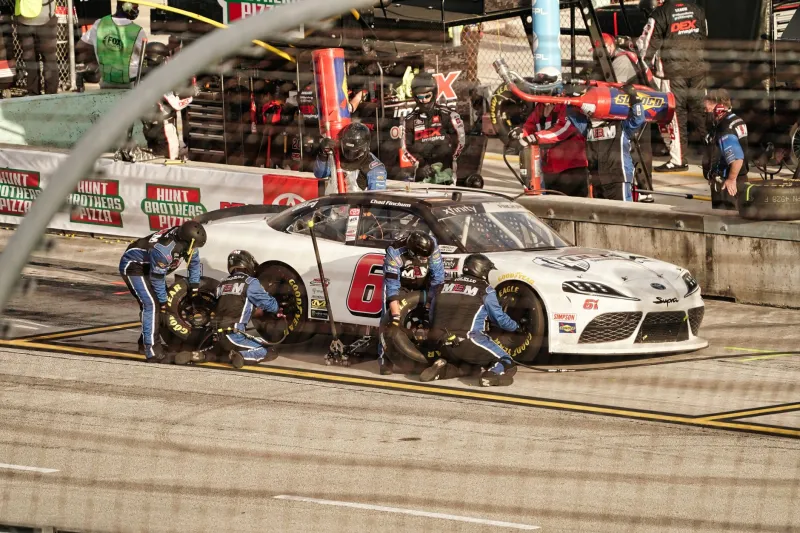
There's a moment during almost every race where the real competition isn't happening on the track. It's happening in a 16-foot concrete box, surrounded by fuel, rubber, and four guys moving faster than most people can process. The pit stop. It's one of the most underrated arenas in all of motorsports, and for the teams that get it right, it can be the difference between a trophy and a long, quiet ride home.
We spent time talking with crew chiefs and pit crew members across NASCAR and IndyCar circles, and the picture that emerged was pretty clear: the teams consistently winning on pit road aren't just talented — they're obsessed with preparation.
The Art of Drilling for 12 Seconds
Ask any pit crew coach what separates elite teams from the rest, and the answer almost always comes back to repetition. Not just reps, but intentional reps. Teams like the top-funded NASCAR outfits run their pit crews through hundreds of mock stops per week, often in dedicated training facilities that mirror race-day conditions as closely as possible.
"People think you just show up and change tires," one over-the-wall jackman told us, speaking on the condition of anonymity to protect his team's competitive edge. "But every movement is choreographed. Every step, every hand placement, every second of my body position is rehearsed so many times that on race day, my brain basically shuts off and my muscle memory takes over."
That kind of automation under pressure is the goal. Because on race day, there's no room for thinking. There's only doing.
Crew chiefs spend enormous chunks of their week reviewing stop footage — their own and their competitors'. Slow-motion video analysis has become standard practice, with teams breaking down stops frame by frame to identify even half-second inefficiencies. A tire carrier who takes one extra step. A gas man whose nozzle connection is slightly off-angle. These tiny details compound over a 400-mile race in ways that absolutely show up in the final standings.
Famous Failures: When Pit Road Decides the Race
You don't have to dig too deep into racing history to find moments where pit crew mistakes rewrote the outcome of a race — or an entire season.
One of the most talked-about examples in NASCAR circles came during a late-season points race where a championship-contending team sent their driver back onto the track with a loose lug nut. The driver made it three laps before the wheel came off. Championship over. Years of work, millions of dollars, and one missed lug nut.
In IndyCar, the margin is even thinner. With four-tire stops routinely completed in under eight seconds at the elite level, the gap between a clean stop and a catastrophic one is almost invisible to the naked eye. A fuel hose that doesn't seat properly, a tire gun that catches for even a fraction of a second too long — these aren't just inconveniences. They're race-enders.
"I've seen teams lose 10 positions in a single stop," said one veteran crew chief with multiple Cup Series seasons under his belt. "And the brutal part is, the driver did everything right. The car was perfect. The strategy was perfect. But we gave it all away in 14 seconds."
Psychology Under the Lights
What's fascinating — and what a lot of casual fans don't realize — is how heavily the psychological side of pit crew performance has become a focus for elite teams. Several top-tier organizations now work with sports psychologists to help over-the-wall crew members manage the unique pressure of performing a physical task in front of 100,000 fans while a race hangs in the balance.
Visualization techniques borrowed from Olympic athletics are becoming standard. Crew members are coached to mentally rehearse their stop sequence before every single pit event, walking through each motion in their mind the same way a gymnast might visualize a floor routine before stepping onto the mat.
Breathing protocols, pre-stop rituals, and even communication scripts between crew members are all part of the toolkit. The goal is to create a bubble of controlled focus that blocks out the crowd noise, the radio chatter, and the very human temptation to rush.
"Rushing is the enemy," one tire changer explained. "Everybody thinks fast means rushed. But the fastest stops are actually the most controlled. You're not trying to go fast — you're trying to be precise. Fast is what happens when you're precise."
Technology's Role in Building Better Crews
Beyond the psychological and physical training, technology has become a massive part of how modern teams develop their pit crews. High-speed cameras capable of capturing thousands of frames per second are now used to analyze stop mechanics in ways that were simply impossible a decade ago.
Some teams have integrated wearable sensors into training sessions, tracking things like hand speed, body rotation, and even heart rate during simulated stops. The data gets fed into performance dashboards that coaches use to identify fatigue patterns and optimize training loads throughout the season.
There's also a growing use of simulation software that lets crew chiefs model different pit strategies and stop sequences before they ever set foot on pit road. How does a two-tire stop under caution compare to staying out and gambling on fuel mileage? What's the risk-reward on pitting under green with 30 laps to go? Teams that can model these decisions in advance arrive at the track with a playbook instead of a gut feeling.
The Human Element Still Wins
For all the technology and training science, though, every crew chief we spoke with came back to the same fundamental truth: at the end of the day, it's still people doing this job. And people have good days and bad days.
The best teams build cultures where crew members can talk openly about struggles without fear of being cut. Where a tire carrier who's been fighting a nagging shoulder injury feels safe enough to say so before it becomes a race-day problem. Where mistakes in practice are treated as learning opportunities rather than fireable offenses.
That kind of trust doesn't happen by accident. It's built the same way a fast pit stop is built — through consistent effort, honest communication, and a genuine belief that the team's success belongs to everyone over that wall.
Because in racing, the clock never lies. And the teams that understand what really drives those numbers — preparation, psychology, technology, and trust — are the ones you'll see celebrating in Victory Lane.